How to Decide What to Invest in as a Retail Investor

Trading applications have become extremely popular, especially since COVID. In the last decade, the number of investors using trading applications have increased by more than 400%. As a result, investors today have a staggering amount of choices from the funds available to them to the platforms they can invest through but not all of these choices serve the interests of the investor. So how should investors choose where to put their hard earned money?
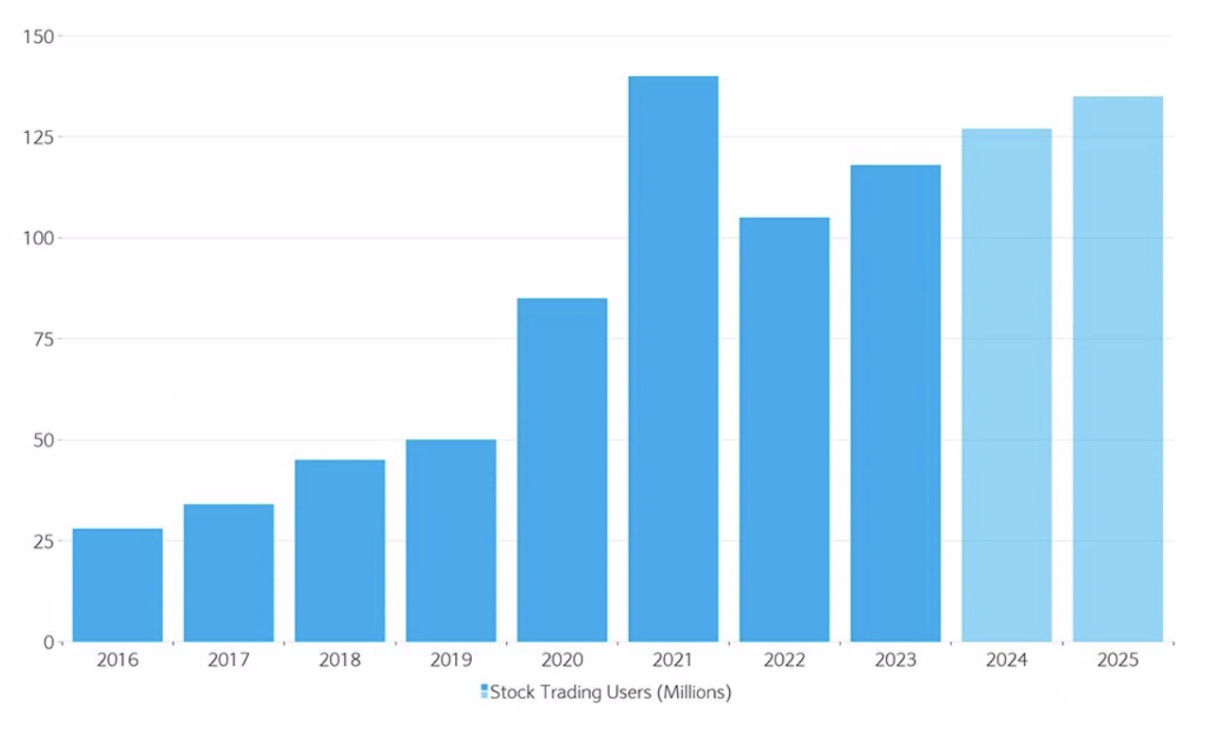
The number of users on stock trading applications in millions
The US Trap
Many new investors have spent time researching on finance and investing sub-Reddits, watching videos from “finance gurus” on YouTube, or received a TikTok tip on the “next best stock” they should invest in. However, these avenues often fail to give the investor proper context for that piece of advice and assume that a single investing tip would work for most.
A popular nugget used by investors is Warren Buffett’s claim that the S&P 500 would outperform most hedge funds and that if he was a retail investor, he would simply invest there. While this was true when he made the claim over 20 years ago, the markets have changed significantly since then. Trading applications and access to new information has made it easy for every person to follow this advice.
As a result, the S&P 500 has been carried by this wave and nobody, not even Warren Buffett knows if this growth can be sustained. Buffett himself seems to agree with this. He sold off all of Berkshire Hathaway’s holdings in the S&P 500 before retiring. No other billionaire seems to be as generous with their knowledge and the advice that has been passed down to us has become outdated.
So What Now?
The facts are simple. You have all the tools in your arsenal. You have access to ETFs, you have a steady income, you know that you must invest, and you know that you need time. So where should you put your money? The answer is quite simple. You need to follow a series of steps to grow your money over time.
Step 1: Decide What You Want to Achieve
You know you need to invest so that your money isn’t gobbled up by inflation but what exactly do you want to use this money for? Do you want to buy a new Mercedes? Do you want to get your children married at a palace in Jaipur? Or do you simply want to retire early without worrying about how you will support your family?
Your intention will define the level of risk you can afford to take with your investments and the time you should allow for the growth machine to start delivering rewards. Start with the end and work your way backwards. This will also give you some level of stability in times of crisis since you have a plan that will outlast any market crash.
Step 2: Choose the Correct Platform
There is no shortage of trading apps vying for your attention. As a result of this competitive landscape, platforms try to pull you in with free stocks, $0 opening fees, and minimal management fees. They can do this because once you have invested your money on their platform, you are unlikely to move it to another platform due to the costs involved in such a move. However, this does not mean that you are actually saving on fees.
Online platforms often hide fees such as withdrawal fees, dividend distribution fees, currency exchange fees, and more. This is even before tax considerations come into play. Make sure to speak to your wealth manager to find the most cost effective way to invest in the long term. Ask clear questions about fees and if they can’t answer, move on to the next wealth manager. Your money is too precious to put in the hands of people you don’t trust.
Step 3: Choose the Right Funds to Invest Your Money in (Diversify, Diversify, Diversify)
Now it's time to choose the funds that you want to invest in. There will be some markets that you have more faith in than others. For example, the US being the largest economy in the world has to be part of your portfolio but it cannot be the entire portfolio. Next, growth economies such as India have to be considered. They have tremendous growth potential and are already starting to yield dividends for investors that placed their trust in them early.
You also have to ensure that your funds are diversified by industry. Technology is an investor favourite but you have to balance the volatility of these stocks with funds that can give you access to cash-rich companies that have a proven track record of growth. This diversification allows your portfolio to keep growing, albeit modestly, even if AI growth slows down or a bubble bursts.
Step 4: Stay the Course
Now you have a plan and you have put it into action. It is important that you don’t allow market fluctuations or random speculation to throw you off your game. The market always rewards consistency and patience. If there is a downward swing in one of your preferred stocks, keep investing as steadily as you did before. This comes with some caveats. Ensure that the downturn is not threatening the very existence of the company. For example, if you were invested in Blockbuster Video, don’t keep investing in it once Netflix puts a nail in its head. However, if there is a downturn that is based on investor sentiment and the financials of a company seem right, keep your investments going at the pace you were investing before.
Step 5: Evaluate and Reevaluate Your Strategy at Different Points in Your Life
The markets might reward a straight line, unemotional method of investing but sometimes, life gets in the way. Priorities change and you might need to plan for new expenses such as a child or an aging parent. Take the time to evaluate whether your investment strategy is still in line with the kind of life you want to lead. A fresh graduate might not have the temperament that an experienced professional has. A father of 2 would not want to take the same risks that a bachelor would. Choose a strategy that works for you and as you evolve, make sure your strategy evolves too.
Invest the Right Way
In a world where investing has never been more accessible, the paradox is that clarity has never been more elusive. Retail investors today are inundated with information, opinions, and opportunities but successful investing has never been about chasing the loudest voice or the latest trend. It is about discipline, structure, and alignment with your personal goals.
There is no single “best” investment that works for everyone. What matters is building a strategy that reflects your objectives, manages risk appropriately, and remains resilient across market cycles. By defining your goals, selecting the right platform, diversifying thoughtfully, staying consistent, and revisiting your plan as life evolves, you move away from speculation and towards intentional wealth building.
Learn how you can make the most of your financial journey by booking a free consultation with a member of our team today.
